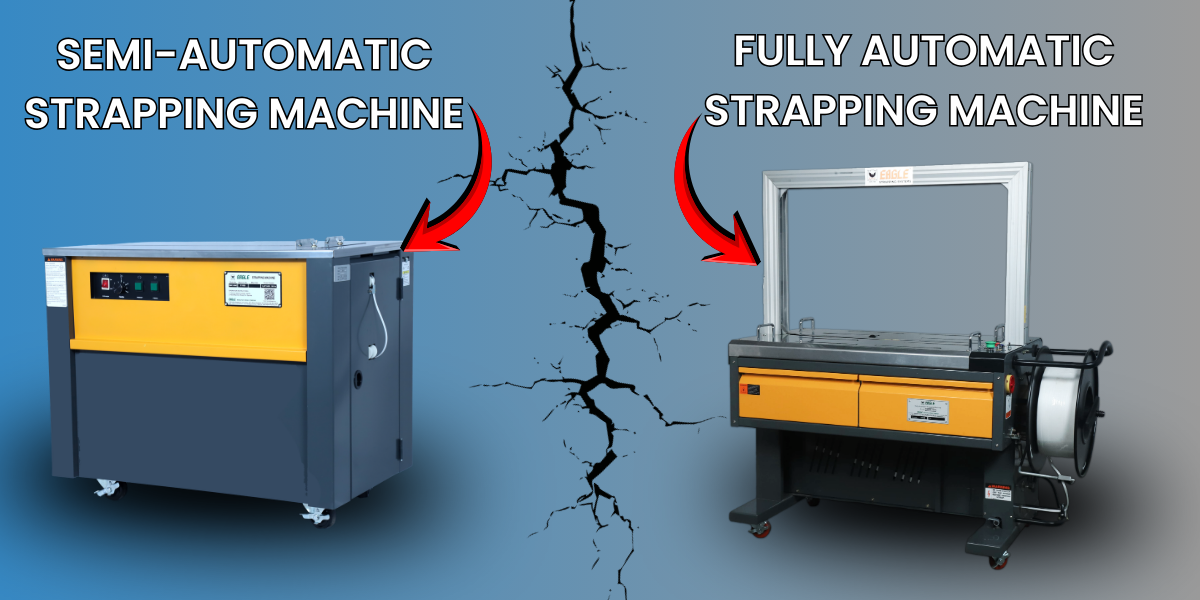
Differences between Semi-Automatic and Best Fully Automatic Strapping Machines
In today’s fast-paced packaging and logistics world, strapping has become a critical part of securing products for safe storage and transportation. Whether you are shipping cartons, bundling products, or unitizing heavy loads, the right strapping machine can make your packaging process faster, safer, and more reliable.
But when it comes to choosing a strapping solution, most businesses get stuck at one major question:
Should we buy a Semi-Automatic Strapping Machine or a Fully Automatic Strapping Machine?
Both machines serve the same purpose—tightening and sealing straps around packages—but their working process, speed, automation level, and cost are very different.
In this blog, we will explain the key differences between semi-automatic and best fully automatic strapping machines, their advantages, best use cases, and how to choose the right one for your packaging needs.

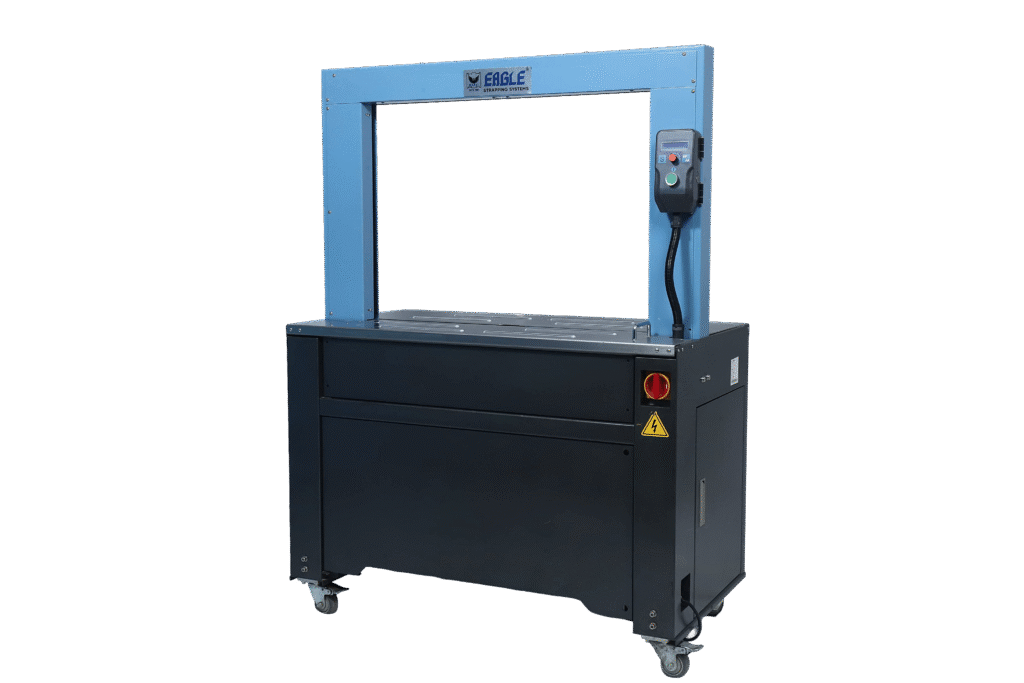
What is a Strapping Machine?
A strapping machine is a packaging machine used to apply a strap (usually PP, PET, or steel strap) around a product or package. The strap is then tightened and sealed to secure the goods during handling, warehousing, and shipping.
Strapping is widely used in industries such as:
E-commerce & logistics
Food & beverages
Pharmaceuticals
Manufacturing
Printing & paper
Textile and garment
Electronics
Warehousing and distribution
At Eagle Manufacturing Company, established in 1969, we understand that packaging is not just about sealing products—it is about ensuring safety, efficiency, and long-term reliability.
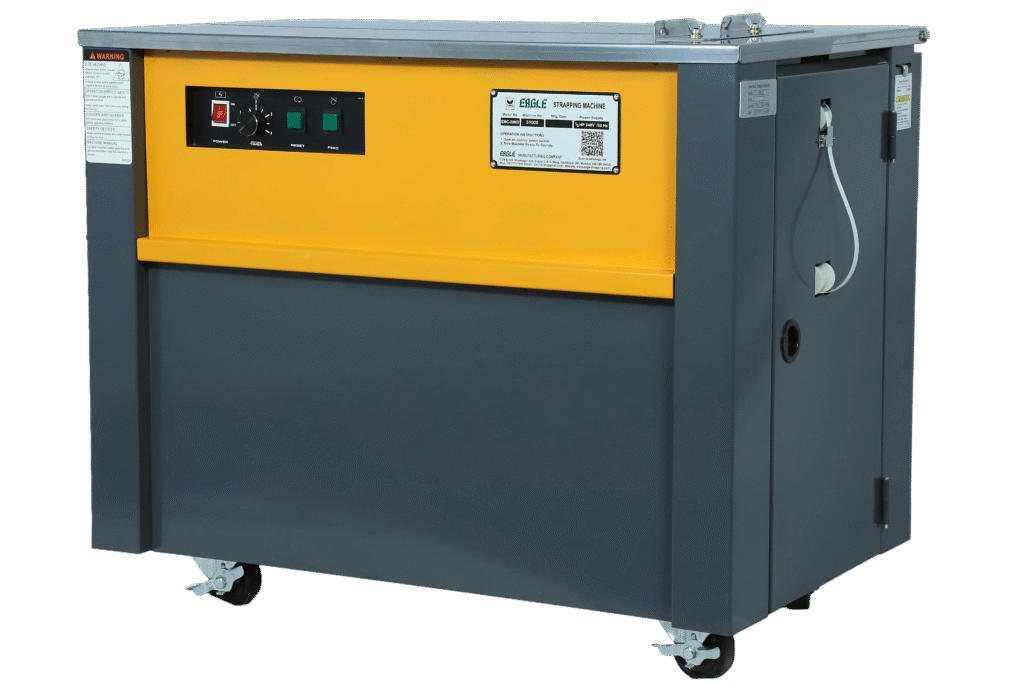
What is a Semi-Automatic Strapping Machine?
A semi-automatic strapping machine requires manual involvement from the operator. The machine performs strapping functions like tightening and sealing, but the operator must insert the strap around the package manually.
How Semi-Automatic Strapping Works:
Operator places the package on the machine table.
Operator manually wraps the strap around the package.
Strap is inserted into the machine slot.
Machine automatically tightens the strap.
Machine seals and cuts the strap.
Operator removes the strapped package.
Semi-automatic machines are widely used for small businesses, low-volume packaging, and manual packaging lines.
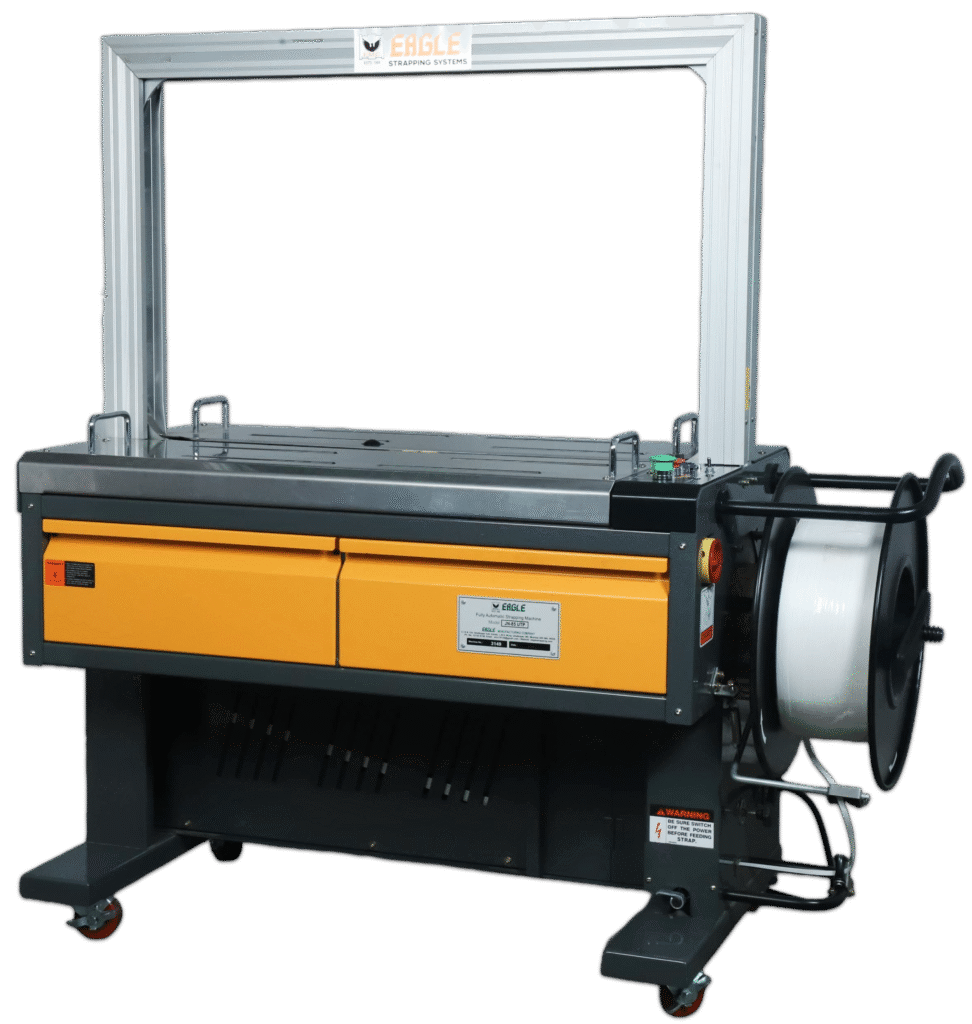
What is a Fully Automatic Strapping Machine?
A best Fully Automatic Strapping Machine performs strapping operations with minimal or no human involvement. The operator only needs to place the package on the conveyor (or the package comes automatically), and the machine detects the package, straps it, tightens, seals, cuts, and releases it automatically.
How Fully Automatic Strapping Works:
Package moves into the strapping area via conveyor.
Sensors detect package position.
Strap is automatically fed around the package.
Machine tightens strap as per preset tension.
Machine seals and cuts the strap.
Package moves out automatically.
A best Fully Automatic Strapping Machine is commonly used in high-speed industries and production lines where efficiency and consistency matter the most.
Key Differences Between Semi-Automatic and Fully Automatic Strapping Machines
Let’s compare both machines in detail:
Level of Automation
Semi-Automatic Strapping Machine
Requires operator to manually feed the strap around the package.
Operator is involved in every strapping cycle.
Suitable for manual packing environments.
Fully Automatic Strapping Machine
No manual strap feeding required.
Machine automatically straps packages using sensors and automation.
Suitable for production lines and conveyor-based packaging systems.
Speed and Output
Semi-Automatic Strapping Machine
Output depends on operator speed.
Usually slower than automatic systems.
Ideal for low to medium packaging volume.
Typical speed:
Up to 15–25 straps per minute (depending on operator efficiency)
Fully Automatic Strapping Machine
Much faster and consistent.
Ideal for high-volume packaging.
Works continuously with conveyors.
Typical speed:
Up to 30–60 straps per minute (depending on model and product size)
Labor Requirement
Semi-Automatic Strapping Machine
Requires an operator for each machine.
More manpower needed for larger production.
Fully Automatic Strapping Machine
Minimal labor required.
One operator can supervise multiple machines.
Reduces packaging workforce cost.
Packaging Consistency and Quality
Semi-Automatic Strapping Machine
Strapping quality depends on operator placement.
May result in inconsistent strap positioning.
Fully Automatic Strapping Machine
Straps are placed consistently at the same position.
Tension and sealing are uniform.
Produces a professional and clean finish.
Integration with Packaging Lines
Semi-Automatic Strapping Machine
Works as a standalone machine.
Not designed for conveyors or automated lines.
Best for manual packaging setups.
Fully Automatic Strapping Machine
Designed for integration with:
Conveyor systems
Carton sealing machines
Pallet wrapping machines
Automatic packing lines
This makes it a preferred choice for industries scaling up their packaging process.
Cost and Investment
Semi-Automatic Strapping Machine
Lower cost.
Best for startups and small businesses.
Budget-friendly option.
Fully Automatic Strapping Machine
Higher initial cost.
Requires more advanced components and sensors.
Higher ROI in high-volume operations.
If you strap hundreds or thousands of cartons daily, the cost of a Fully Automatic Strapping Machine becomes an investment, not an expense.
Maintenance and Complexity
Semi-Automatic Strapping Machine
Simple design.
Easier to operate and maintain.
Fewer sensors and electronic components.
Fully Automatic Strapping Machine
More advanced technology.
Requires trained technicians for setup and maintenance.
More components = higher complexity.
However, with a trusted manufacturer like Eagle, maintenance becomes easier due to durable build quality and support.
Space Requirement
Semi-Automatic Strapping Machine
Compact design.
Easy to move and install.
Suitable for small packing rooms.
Fully Automatic Strapping Machine
Requires more space.
Often installed in-line with conveyors.
Needs dedicated packaging area.
When Should You Choose a Semi-Automatic Strapping Machine?
A semi-automatic strapping machine is a perfect choice when:
✅ You have low packaging volume
✅ You operate a manual packing process
✅ You need a budget-friendly machine
✅ Your packages vary in size and shape
✅ You don’t have a conveyor system
✅ You want simple operation and easy maintenance
Example Use Case:
If you strap around 100–400 cartons per day, a semi-automatic machine can easily handle the job.
When Should You Choose a best Fully Automatic Strapping Machine?
A best Fully Automatic Strapping Machine is the right solution when:
✅ You have high daily packaging volume
✅ You want faster packaging speed
✅ You want consistent strap placement
✅ You want to reduce manpower cost
✅ You have or plan to install conveyors
✅ You want to scale your operations
Example Use Case:
If you strap around 500–5000 cartons per day, a Fully Automatic Strapping Machine will provide the best ROI.
Why Fully Automatic Strapping Machines are Becoming the Industry Standard
Many industries are moving towards automation for one simple reason:
Speed + consistency + reduced labor = higher profit.
Here are some strong reasons why businesses are choosing fully automatic systems:
Faster Order Fulfillment
In industries like e-commerce, delivery speed matters. Faster strapping means faster dispatch.
Reduced Packaging Errors
Manual strapping can cause mistakes like loose straps, improper sealing, or strap misplacement. Automatic strapping reduces these issues.
Better Worker Safety
Manual handling and repetitive packaging tasks can lead to fatigue and injuries. Automation improves safety.
Long-Term Cost Savings
While the initial investment is higher, a best Fully Automatic Strapping Machine saves cost in:
Labor
Rework
Strap wastage
Downtime
Strap Materials Used in Semi-Automatic and Fully Automatic Machines
Both semi-automatic and best fully automatic strapping machines commonly use:
PP Strap (Polypropylene)
Lightweight
Cost-effective
Ideal for cartons and light packages
PET Strap (Polyester)
Stronger than PP
Used for heavy packages
Suitable for export packaging and industrial loads
Steel straps are generally used for heavy-duty applications and require specialized strapping tools or machines.
Frequently Ask Questions
If your daily strapping volume is high, a best Fully Automatic Strapping Machine gives better ROI due to speed and manpower savings.
Not really. Modern machines are user-friendly. Most models have simple control panels with preset settings.
You can upgrade your packaging line later, but semi-automatic machines are standalone. Fully automatic machines are better for future scalability.
Most fully automatic machines work best with conveyors, but there are also automatic models designed for standalone operations.
How Eagle Manufacturing Company Helps You Choose the Right Strapping Machine
At Eagle Manufacturing Company (Since 1969), we have been supporting Indian industries with durable and reliable packaging machinery for decades.
We manufacture high-quality strapping and packaging solutions that are designed to:
Improve packaging efficiency
Reduce downtime
Provide consistent strapping quality
Support high-volume industrial use
Deliver long-term value
Whether you need a semi-automatic machine for your warehouse or a best Fully Automatic Strapping Machine for your production line, Eagle ensures you get the best solution for your needs.
Conclusion
Both semi-automatic and fully automatic strapping machines have their own advantages. The best choice depends on your packaging volume, production setup, budget, and long-term growth plan.
If your business is growing and you want to improve packaging speed, reduce manpower dependency, and increase output, investing in a best Fully Automatic Strapping Machine is the smartest move.
But if you need a simple and affordable strapping solution for day-to-day packaging, a semi-automatic machine is still a reliable option.
Looking for the Best Fully Automatic Strapping Machine?
If you are planning to upgrade your packaging line, Eagle Manufacturing Company can help you choose the right model based on your industry, product type, and daily packaging requirement.